

Concrete moves. It expands in summer heat, shrinks in winter and shifts as Melbourne’s clay soils swell and dry out. Expansion joints are the gaps that let a driveway, path or slab move without cracking. The sealant in those gaps is the part that wears out.
Most homeowners only notice an expansion joint when the old filler has crumbled, weeds are growing through it or water is running under the slab. This guide covers what the joints do, how filler differs from sealant, and how a failed joint is repaired properly.
Quick answer: An expansion joint in concrete is a full depth gap between two slabs, or between a slab and a wall, that lets the concrete move. It is packed with a compressible filler and capped with a flexible sealant, usually polyurethane, to keep water and debris out. Outdoors the sealant typically lasts 5 to 10 years. When it cracks, shrinks or pulls away from the edges, it should be cut out and replaced before water gets under the slab.
Expansion Joint or Control Joint?
The two are often confused, and they are repaired differently.
| Expansion joint | Control joint | |
|---|---|---|
| What it is | A full depth gap separating two sections of concrete | A shallow groove cut or tooled into the surface |
| Purpose | Lets slabs expand, contract and move independently | Makes the concrete crack in a neat straight line |
| Typical width | 10 to 20 mm | 3 to 6 mm |
| What goes in it | Compressible filler plus a flexible sealant | Often left open, or sealed to keep water out |
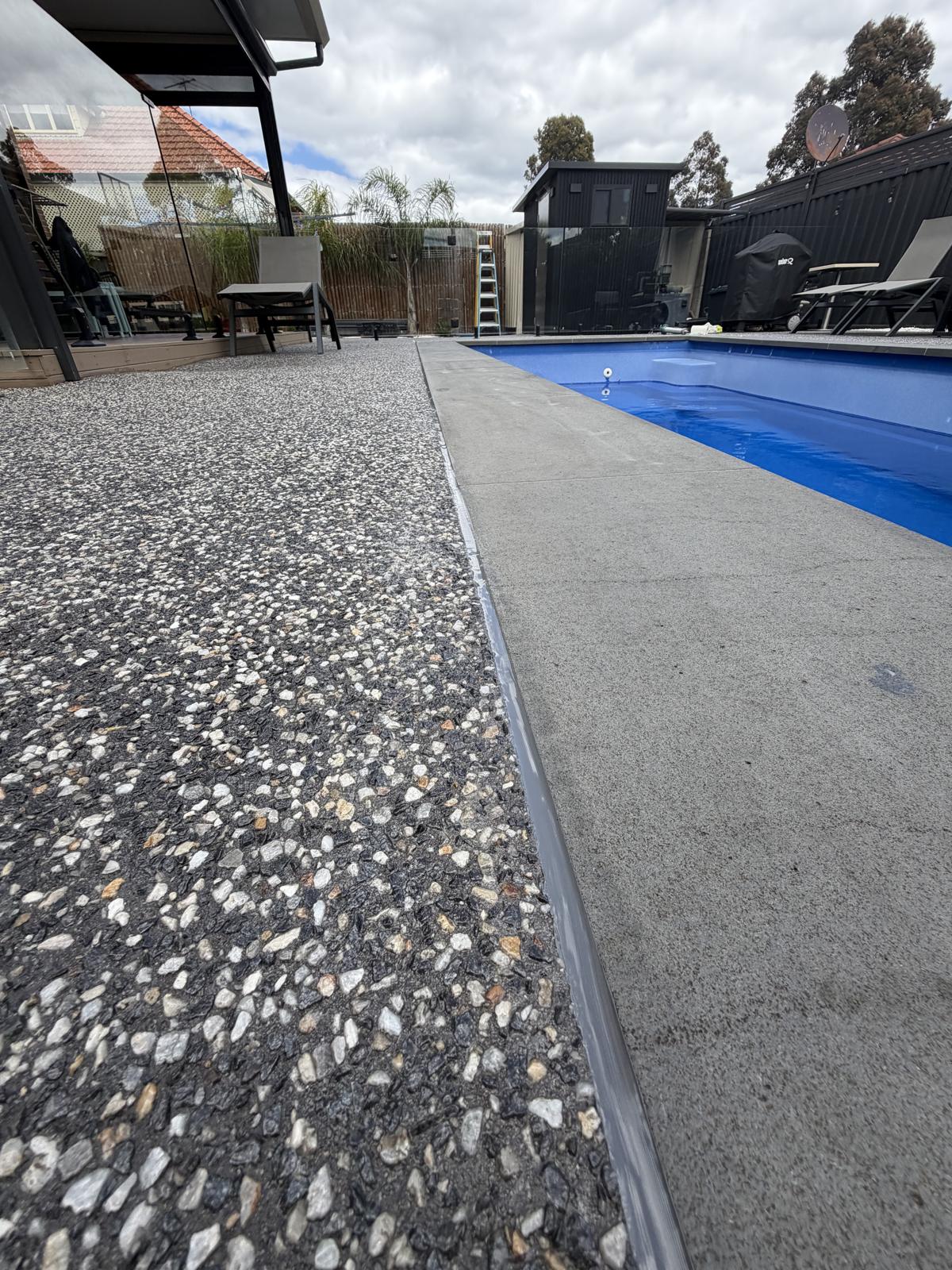
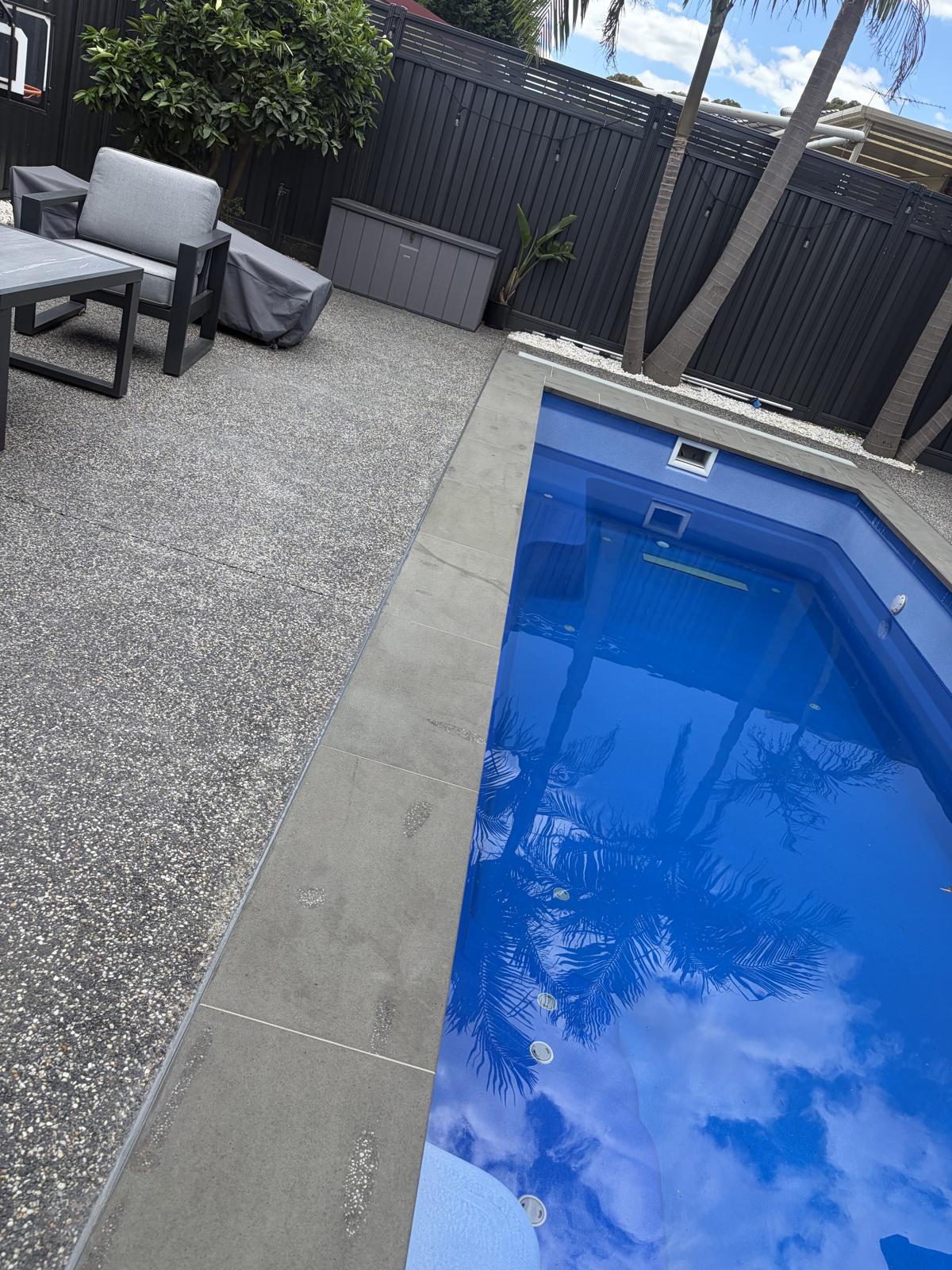
| Where you see it | Driveway to garage slab, path to house wall, around pools, between large slab sections | Every few metres across driveways, paths and garage floors |
Expansion Joint Filler vs Sealant
A joint has two layers, and they do different jobs.
- Filler sits in the body of the joint. It is a compressible foam or fibre board installed when the concrete is poured. It holds the gap open and squashes as the slabs expand. It is not waterproof.
- Backing rod is a round foam rod pushed into the top of the joint before sealing. It sets the depth of the sealant and stops it sticking to the bottom of the joint.
- Sealant is the flexible cap you see at the surface. It bonds to the two concrete faces and stretches as they move. This is the layer that keeps water, dirt and weeds out, and the layer that needs replacing.
Pouring more sealant into a joint with nothing behind it is the most common DIY mistake. The bead ends up too deep, bonds on three sides and tears the first time the concrete moves.
Signs an Expansion Joint Has Failed
- The sealant has cracked, gone hard or split down the middle
- It has pulled away from one side of the joint
- Old fibre or timber filler is rotting or missing
- Weeds or ants are coming up through the joint
- Water pools in the joint or disappears under the slab
- One slab edge is sitting higher than the other
Water under a slab is the real cost. It washes out the base, the slab settles, and a sealing job becomes a concrete repair.
Which Sealant Suits Which Joint
- Polyurethane. The usual choice for driveways, paths and garage floors. It bonds well to concrete, handles foot and vehicle traffic and stays flexible.
- Silicone. Often used where there is high movement or constant sun, and around pool coping where a pool grade product is required.
The right product depends on the joint width, how much the slabs move and what the surface is used for, so it is chosen joint by joint.
How a Concrete Expansion Joint Is Resealed
A reseal that lasts generally follows the same sequence:
- All of the failed sealant and any loose or rotted filler is cut out
- The joint faces are cleaned back to sound concrete
- Dust is removed and the joint is left dry
- Backing is set at the right depth, so the sealant is about half as deep as the joint is wide
- The new sealant is gunned in and tooled to a neat finish
- Traffic is kept off until the sealant has cured, following the product’s instructions
On our jobs the failed sealant is always removed before new caulking goes in, because new sealant will not bond properly over old.
What Does Expansion Joint Sealing Cost?
Our external expansion joint caulking starts from $9 per metre, and large scale commercial joints are typically $10 to $20 per metre. The final rate depends on the width and depth of the joint, how much old material has to come out and how easy the access is. See our pricing guide for current starting rates.
Expansion Joint FAQs
Do expansion joints in concrete need to be sealed?
Yes. An open joint lets water under the slab and fills with dirt and stones that stop the concrete moving freely. A sealed joint keeps the base dry and the gap working.
What is the best filler for concrete expansion joints?
For the body of the joint, a closed cell foam backing rod or compressible foam board. For the surface, a flexible sealant rated for trafficable concrete, most often polyurethane. Sand, mortar and rigid fillers crack out because they cannot move with the slab.
Can I fill an expansion joint with concrete or mortar?
No. A rigid fill removes the gap the slab needs to expand into. The concrete will crack beside the joint or lift at the edges.
How long does expansion joint sealant last?
As a general guide, around 5 to 10 years outdoors for a quality product installed over backing rod. Full sun, heavy vehicle traffic and reactive soil shorten that.
How wide can an expansion joint be sealed?
Most residential joints are 10 to 20 mm and seal easily. Wider gaps can be sealed with the right backing and product. Our guide to caulking large gaps explains how.
Expansion Joint Caulking Across Melbourne
Professional Caulking Group seals and replaces expansion joints for homeowners, builders and property managers across Melbourne, on driveways, paths, patios and garage floors, commercial slabs and pool surrounds. See our service areas.
Over seven years sealing Melbourne homes, with more than 600 five star Google reviews.
Call 0435 803 646 or request a quote for your project.