

Old silicone is easy to spot. It has gone black along the shower base, yellowed around the bath or started peeling away from the tile. Getting it out cleanly is the hard part, and it is the step that decides whether the new bead lasts.
New silicone does not bond to old silicone. If a thin film is left behind, the fresh bead sticks to that film instead of the tile and lets go within months. This guide covers how to remove old silicone sealant properly, which tools help and what to avoid on different surfaces.
Quick answer: To remove old silicone sealant, slice along both edges of the bead with a sharp blade, peel the strip out, then scrape off what is left with a plastic scraper. A silicone remover gel softens stubborn residue. Finish by wiping the joint with methylated spirits or isopropyl alcohol and letting it dry fully. Nothing truly dissolves cured silicone, so most of the job is mechanical.
What You Need
- A sharp utility knife or a silicone removal tool
- A plastic scraper or plastic razor blades
- Silicone remover gel for stubborn residue
- Methylated spirits or isopropyl alcohol and clean cloths
- A mould treatment if there is mould behind the bead
- Gloves, and good ventilation if you are using chemical products
How to Remove Old Silicone, Step by Step
- Cut both edges. Run the blade along the top and bottom of the bead where it meets each surface. Keep the blade shallow so it cuts the silicone, not the tile glaze or the bath.
- Peel the bead out. Lift one end and pull steadily. A bead that has already failed often comes away in long strips.
- Scrape the remainder. Use a plastic scraper to lift the thin skin left on each surface. Work along the joint, not across it.
- Soften what will not move. Apply silicone remover gel to stubborn patches, leave it for the time on the label, then scrape again.
- Treat any mould. Mould usually sits behind the bead where cleaning never reached. Treat it now and rinse, or it grows straight back under the new silicone.
- Wipe down. Clean the joint with methylated spirits or isopropyl alcohol to lift the last of the film and any soap residue.
- Let it dry completely. A shower in daily use holds moisture in the joint. Leave it to dry before anything new goes in.
Does Silicone Remover Actually Work?
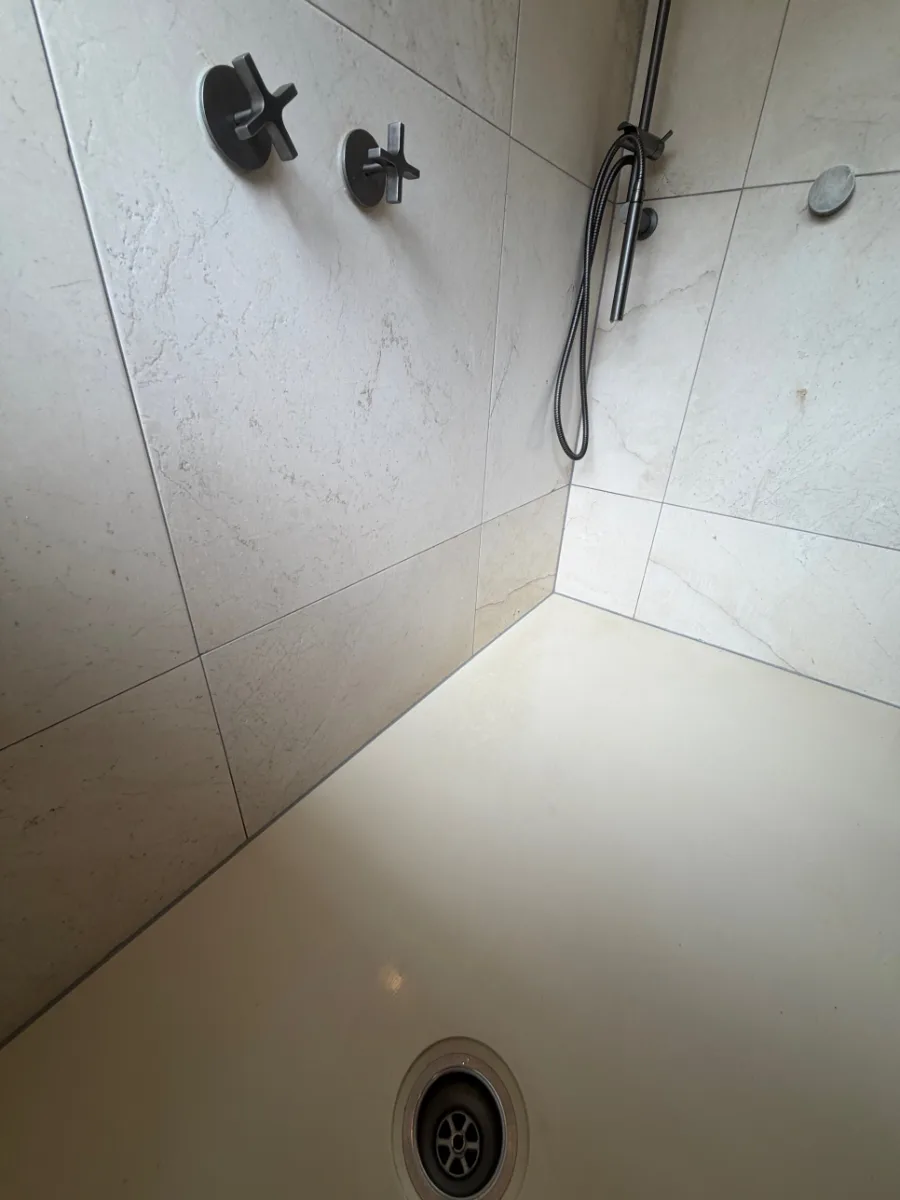
It helps, but it is not a shortcut. Silicone removers soften cured silicone so it scrapes off more easily. They do not melt a full bead away. Cut and peel first, then use remover only on the residue. Always follow the label and test a small hidden area first, because some products can mark plastics, painted surfaces and natural stone.
What to Watch on Each Surface
| Surface | What to do | What to avoid |
|---|---|---|
| Glazed ceramic and porcelain tile | A blade held flat works well on the glaze | Digging the blade tip into grout lines |
| Acrylic baths and shower bases | Plastic scrapers only | Metal blades and harsh solvents, which scratch or cloud acrylic |
| Natural stone | Test any remover on a hidden spot first | Acidic cleaners and leaving solvents to soak in |
| Glass shower screens | A flat razor blade on wet glass | Scraping dry, which can scratch |
| Painted surfaces and timber | Peel gently and use minimal product | Strong solvents that lift paint |
Common Mistakes
- Sealing over the old bead. It looks fine for a few weeks, then peels, and the mould underneath stays put.
- Leaving a thin film behind. The surface should feel clean, not slippery. If water still beads on the joint, there is silicone left.
- Resealing a damp joint. Trapped moisture stops silicone curing and brings mould back fast.
- Using metal on acrylic. One slip leaves a permanent scratch along the bath edge.
When to Call a Professional
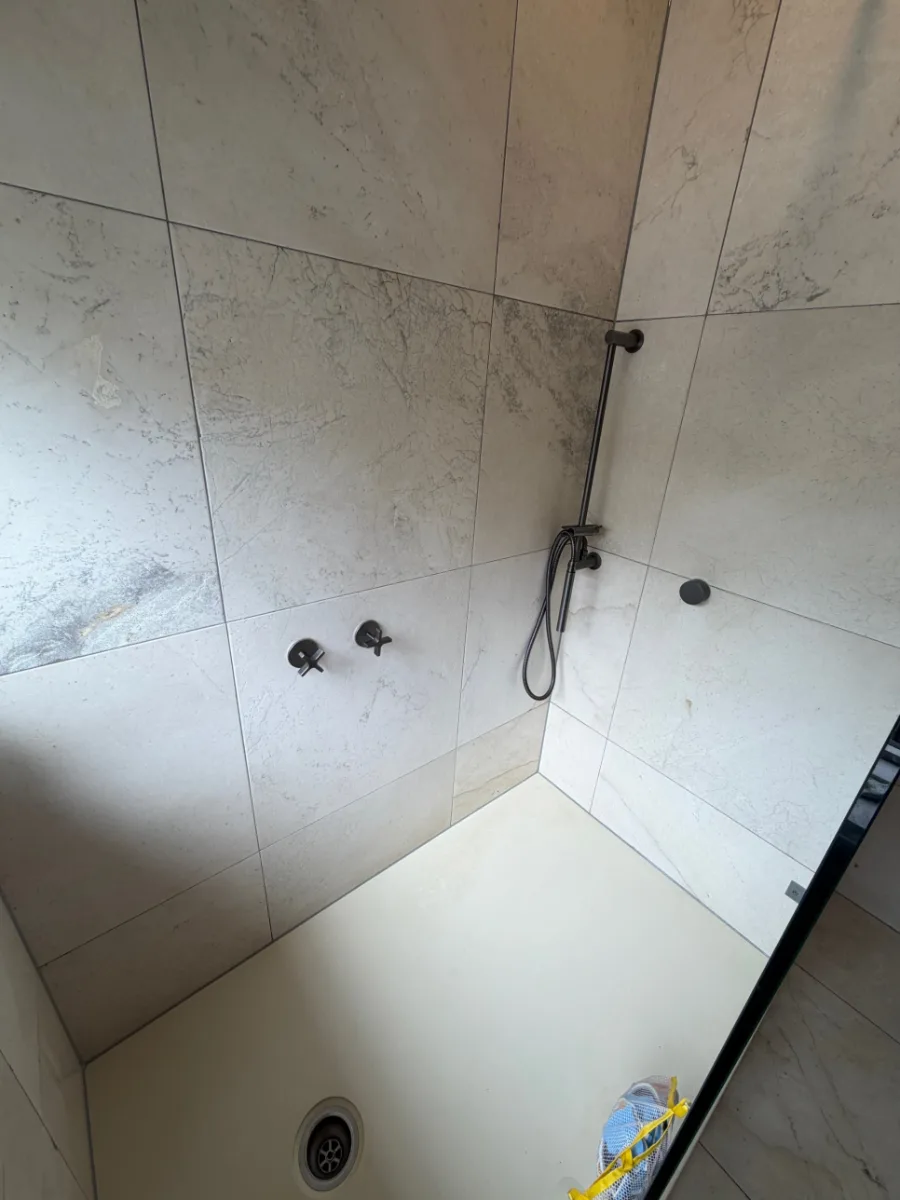
Removal is the slow part of any reseal. It is worth getting help when the silicone runs behind a shower screen, when mould keeps returning, when the surfaces are natural stone or acrylic, or when the joint is still leaking and you are not sure silicone is the cause. Our guide to telling a silicone problem from a waterproofing problem covers that last case.
A professional reseal includes the removal. Our single shower reseal starts from $250 with removal of the old silicone included, though removal that needs extra labour may cost more. See our shower resealing cost guide for a full breakdown.
Silicone Removal FAQs
What dissolves old silicone sealant?
Nothing fully dissolves cured silicone. Silicone remover gels soften it so it can be scraped away, and methylated spirits or isopropyl alcohol lift the film left behind.
What is the easiest way to remove silicone from a shower?
Cut along both edges of the bead, peel it out in strips, scrape the residue with a plastic scraper, then wipe the joint with methylated spirits. Remover gel is only needed for patches that will not scrape off.
How do I remove silicone residue from tiles?
Scrape with a plastic blade first. Then apply silicone remover, wait for the time on the label, scrape again and wipe with isopropyl alcohol.
Can I put new silicone over old silicone?
No. New silicone does not bond to old silicone, and any mould underneath stays there. The old bead has to come out completely first.
How long after removing silicone can I reseal?
As soon as the joint is clean and completely dry. Once the new bead is in, see our guide on how long silicone takes to dry before using the shower.
Shower and Bathroom Resealing Across Melbourne
If you would rather not spend a Saturday scraping, Professional Caulking Group removes old silicone and reseals showers, baths, vanities and kitchens across Melbourne. Read our bathroom resealing guide or see our service areas.
Over seven years sealing Melbourne homes, with more than 600 five star Google reviews.
Call 0435 803 646 or request a quote for your project.