

Most new builds give you two materials to work with. This one gave us five in a single room.
We were brought in at the end of the fitout on this Brunswick new build to seal both kitchens, the bathroom, the joinery runs and the window reveals. Terrazzo tile, stone benchtops, timber veneer joinery, painted brick and a stainless splashback all meet each other somewhere in this house. Here is what the job involved and why a mixed material build takes longer than a standard fitout.
Quick answer: Interior caulking on a new build does two jobs. In the wet zones it keeps water out of the junctions behind sinks, basins and tapware. Everywhere else it closes the line where two materials meet. On a build with this many finishes the colour has to be matched junction by junction, and porous surfaces like brick and terrazzo need a non staining, neutral cure sealant or they shadow along the joint.
Project at a Glance
| Detail | This project |
|---|---|
| Location | Brunswick, Melbourne’s inner north |
| Property type | Architectural new build, residential |
| Scope | Interior caulking to two kitchens, the bathroom, joinery runs and window reveals |
| Key substrates | Terrazzo tile, stone benchtops and basins, timber veneer joinery, painted brick, stainless splashback, aluminium window frames, painted plaster |
| Wet areas | Bathroom with twin stone basins, two kitchen sinks |
| Products | Mould resistant neutral cure silicone in wet areas, colour matched to each surface. Paintable sealant where joinery meets painted plaster |
| Stage | Sealed at the end of the fitout, before handover |
What We Sealed
The scope covered every junction where water sits and every line where two finishes meet in plain view:
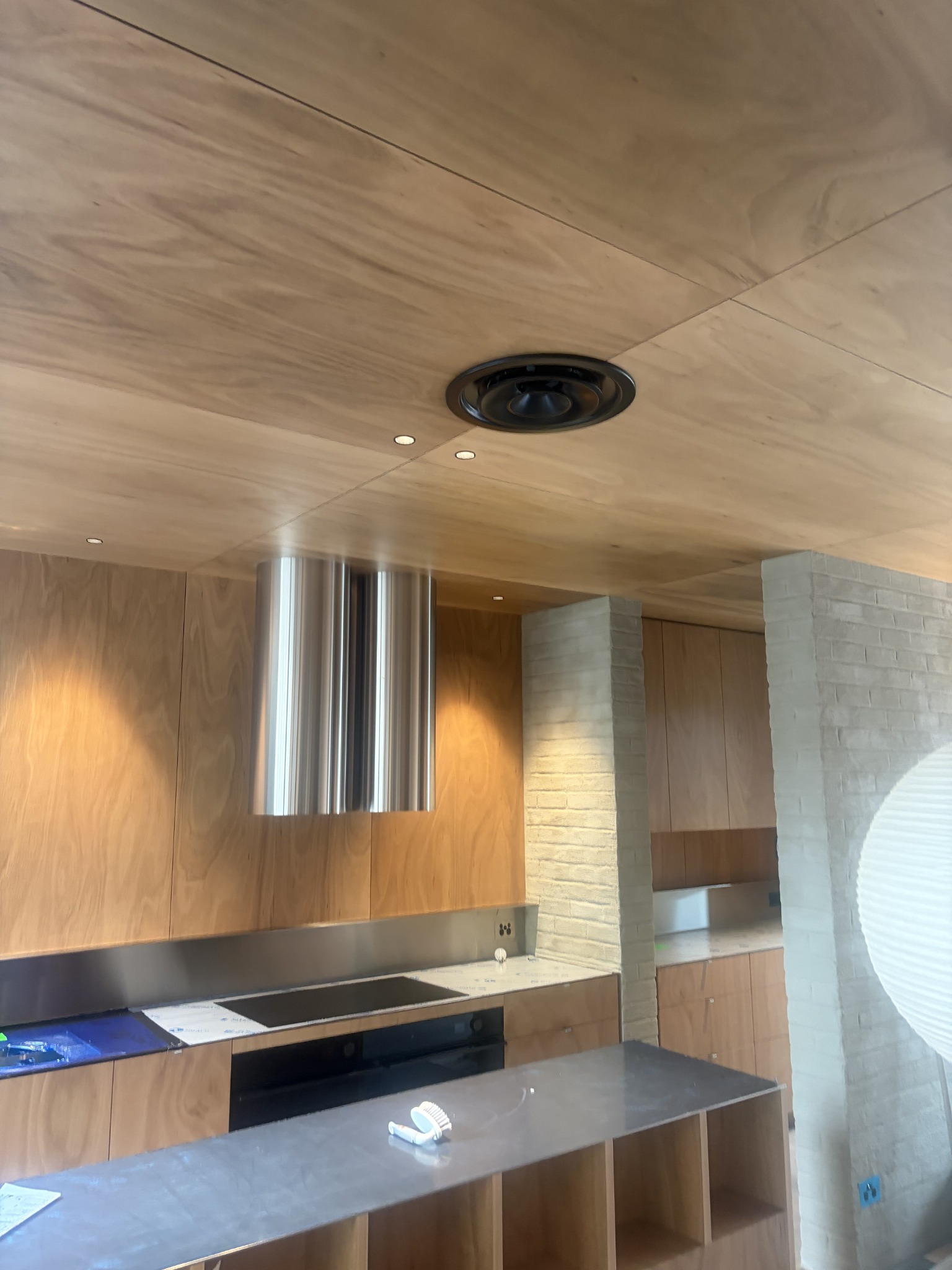
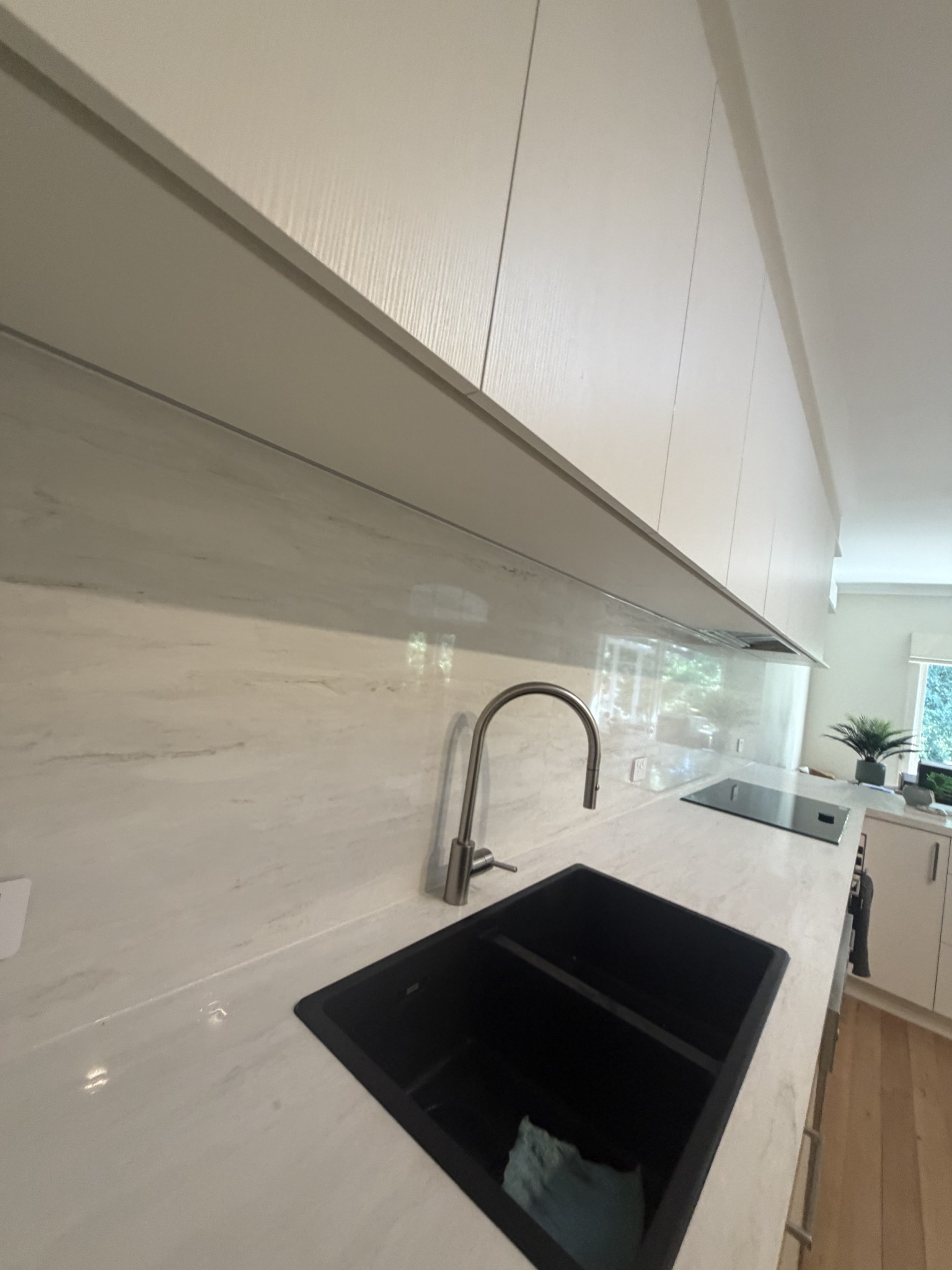
- Main kitchen. Stone benchtop to stainless splashback, the island returns, the cooktop and sink cutouts, and the scribes where the timber veneer joinery runs into painted brick and plaster.
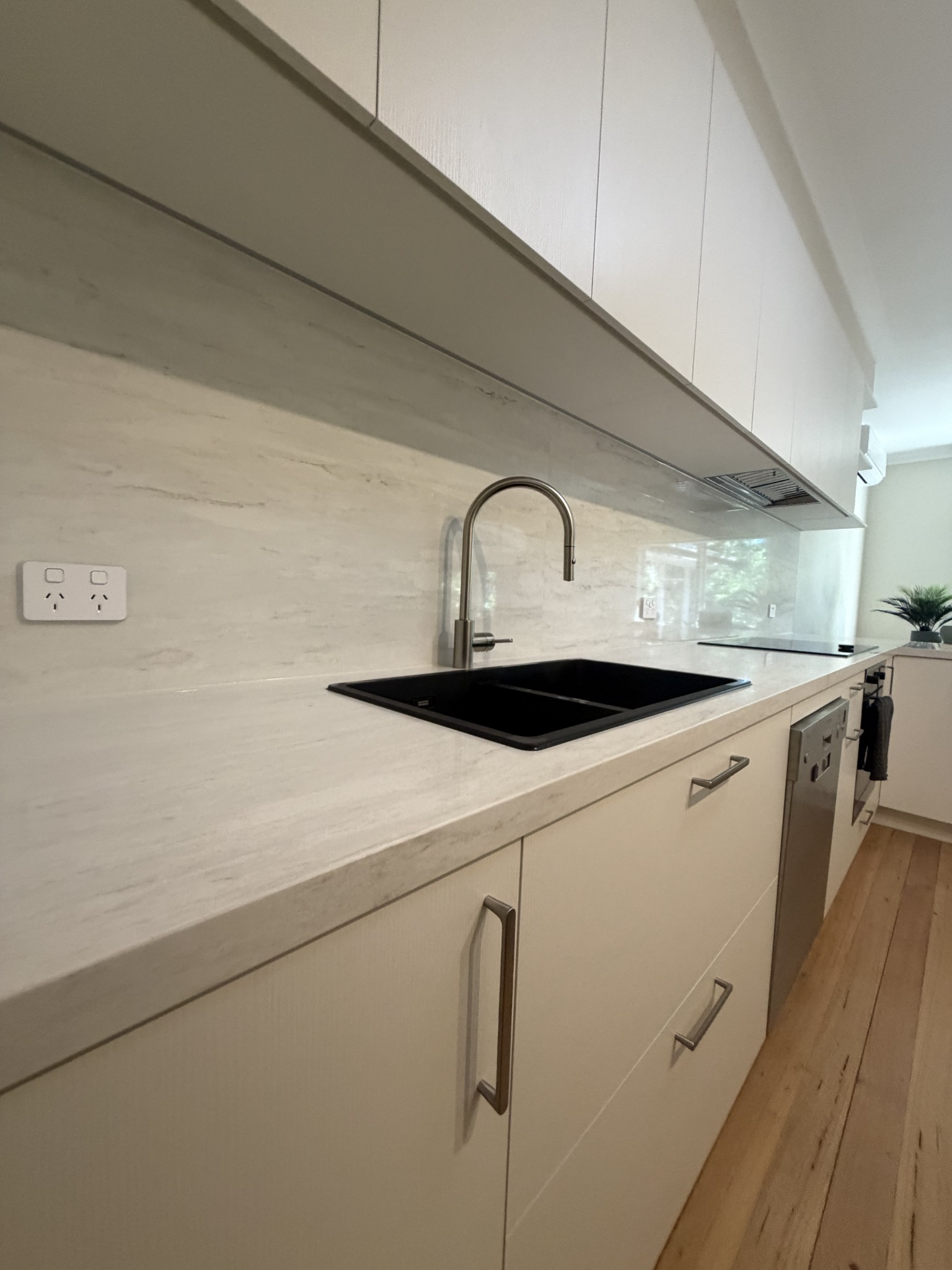
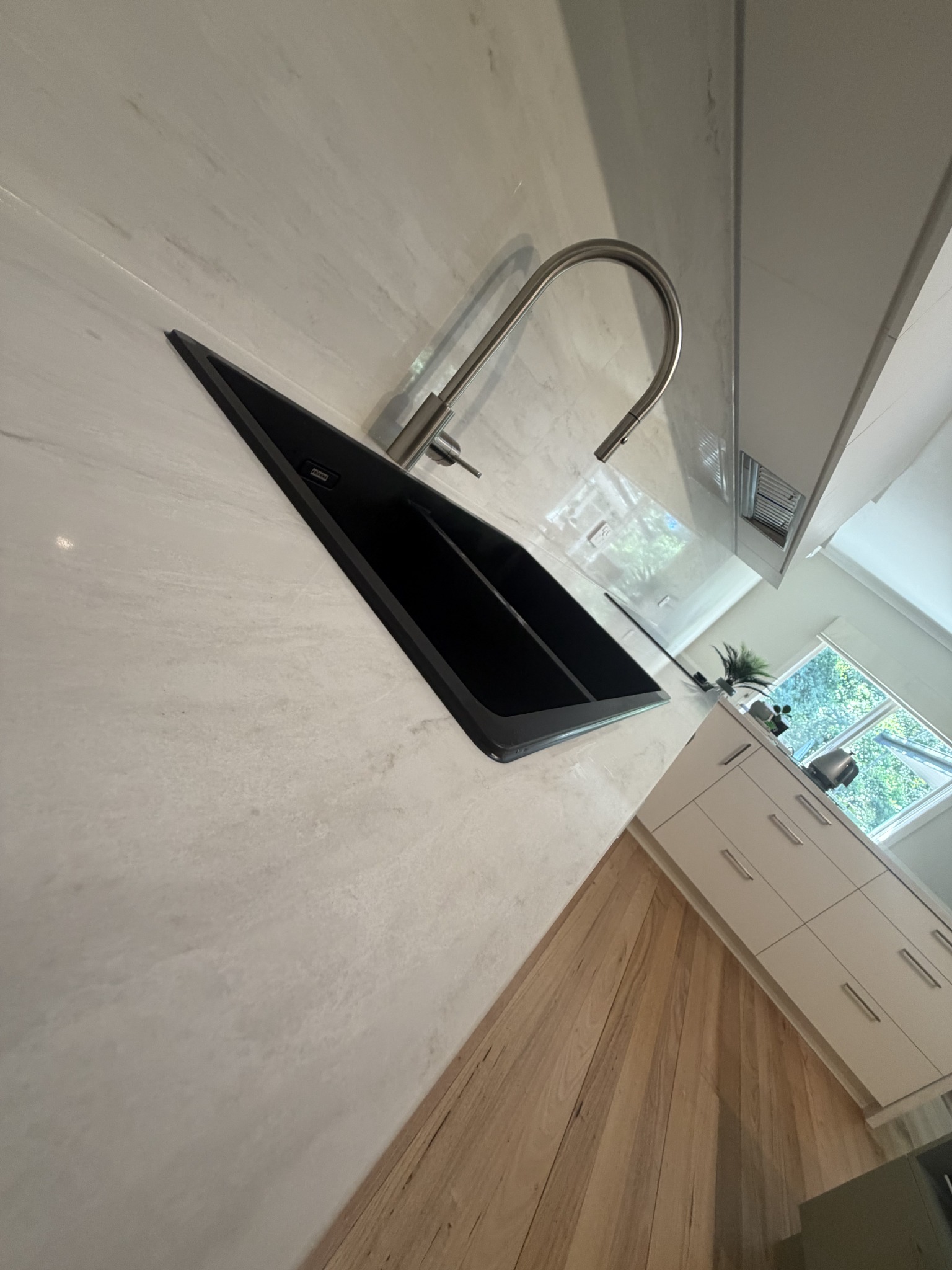
- Second kitchen. The benchtop to splashback line along the full run, the drop in sink rim, the tapware base, the cooktop edge and the cabinetry scribes to the wall.
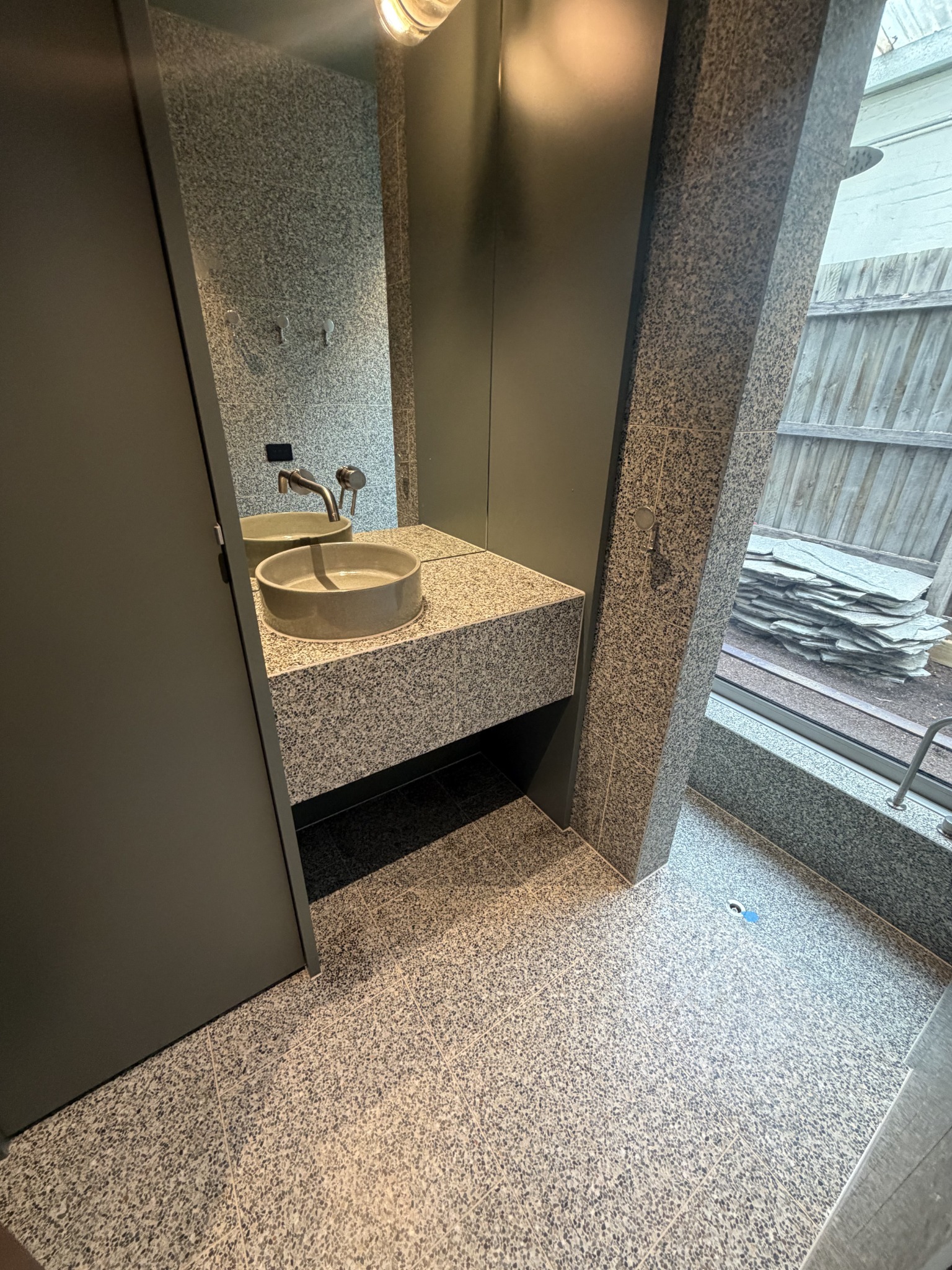
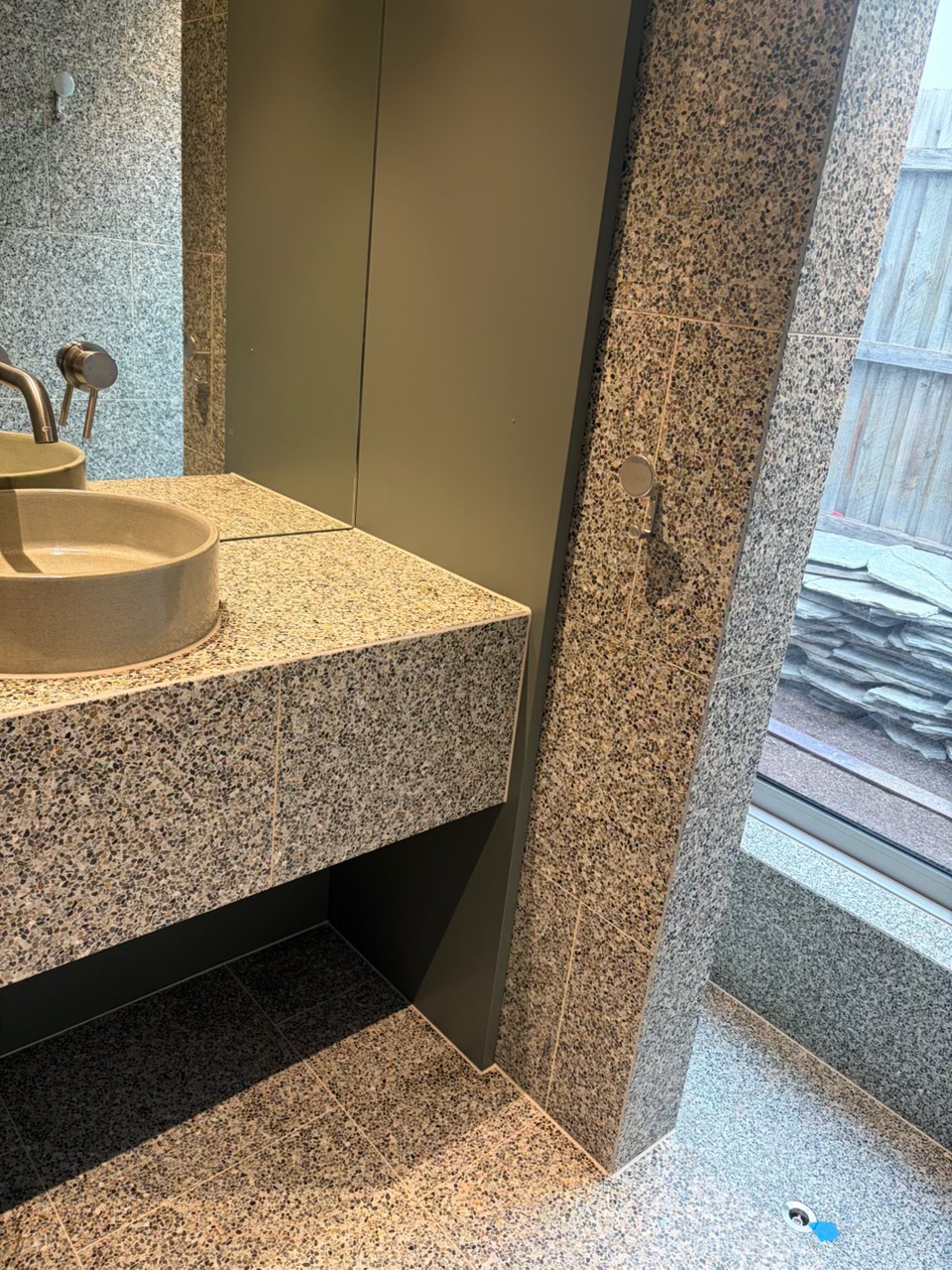
- Bathroom vanity. Both stone basins at the benchtop, the tiled vanity box where it meets the wall and the floor, and the wall mounted tapware penetrations.
- Bathroom tile. Internal corners, wall to floor junctions and the line where terrazzo tile meets the olive joinery.
- Window reveals. Aluminium frames to tile and to plaster, sealed on the internal face.
- Brick junctions. Every line where painted brick meets joinery, plaster or stone.
Why a Mixed Material Build Is a Different Job
The technique is the same as any fitout. The preparation is not.
- Terrazzo has no single colour. The tile here reads black, grey and tan depending on where you stand. A bead matched to one fleck looks wrong against the rest, so we match to the perceived mid tone and let the joint recede.
- Brick is porous and never straight. A bead on painted brick cannot be pulled tight the way it can on plaster. The joint gets backed and tooled to follow the course, which takes several times longer per metre.
- Timber veneer is unforgiving. Sealant on a finished veneer face marks it, and it cannot be sanded back without taking the finish with it. Both sides of every veneer junction were masked before any sealant went near them.
- Stone stains. The wrong sealant bleeds into natural stone and leaves a dark shadow along the joint that never comes out. Neutral cure, non staining silicone only.
- Steel and stone move differently. The stainless splashback expands at a different rate to the benchtop below it, so that junction needs a flexible bead rather than a rigid fill.
Products and Method
- Mould resistant, neutral cure silicone in every wet area, colour matched to the stone or tile it sits against
- Paintable sealant where joinery and skirtings meet painted plaster
- Backing rod in the wider, irregular joints along the brick
- All surfaces cleaned, dried and masked before sealing, so nothing is dragged across stone or veneer
- Beads tooled to a slim concave profile so water sheds instead of pooling
- Wet areas left to cure before use
New Build Caulking FAQs
When should caulking be done on a new build?
Last. Benchtops, sinks, tapware, splashbacks and joinery all need to be installed and finished first, otherwise the bead gets cut or contaminated and has to be redone.
Can silicone be matched to terrazzo or speckled stone?
Yes. We carry a wide colour range and match on site. Where a surface has strong flecking we match to the base tone so the joint sits back rather than drawing the eye.
Will sealant damage timber veneer joinery?
Not when the junction is masked properly and a neutral cure product is used. The risk is in the cleanup, not the product, which is why we mask both faces before the gun comes out.
How long does a job like this take?
Two kitchens, a bathroom and the joinery runs is typically one to two days, depending on how many colours need matching and how much of the work sits on irregular surfaces. Our guide on how long silicone takes to dry covers cure times before the wet areas can be used.
Interior Caulking Across Brunswick and the Inner North
Professional Caulking Group works with builders, architects and homeowners on new builds, renovations and fitouts across Melbourne, including Brunswick, Brunswick East, Brunswick West, Coburg, Fitzroy North, Carlton North, Northcote and Parkville. See our service areas.
Over seven years sealing Melbourne homes, with more than 580 five star Google reviews.
Call 0435 803 646 or request a quote for your project.