

The joint around a pool is the one line in a backyard that is built to move. It is also the first one to show when it stops doing its job.
This pool caulking job in Bundoora covered the expansion joint that runs between the stone pool coping and the exposed aggregate concrete surround. Here is what the job involved, and why the gap around a pool needs a flexible sealant rather than grout or mortar.
Quick answer: Pool caulking seals the expansion joint between the pool coping and the surrounding paving or concrete. The pool shell and the slab around it move independently, so the gap between them has to stay flexible. A sealed joint keeps water, dirt and debris out of the gap, protects the edges of the coping and the concrete, and lets both sides move without cracking.
Project at a Glance
| Detail | This project |
|---|---|
| Location | Bundoora, Melbourne’s northern suburbs |
| Property type | Residential backyard pool |
| Scope | Expansion joint caulking between the pool coping and the concrete surround |
| Key substrates | Honed stone coping pavers, exposed aggregate concrete |
| Exposure | Full sun, pool water splash and regular foot traffic |
| Products | Flexible exterior joint sealant in grey, matched to the coping |
| Finish | Tooled just below the surface so the joint sits flush underfoot |
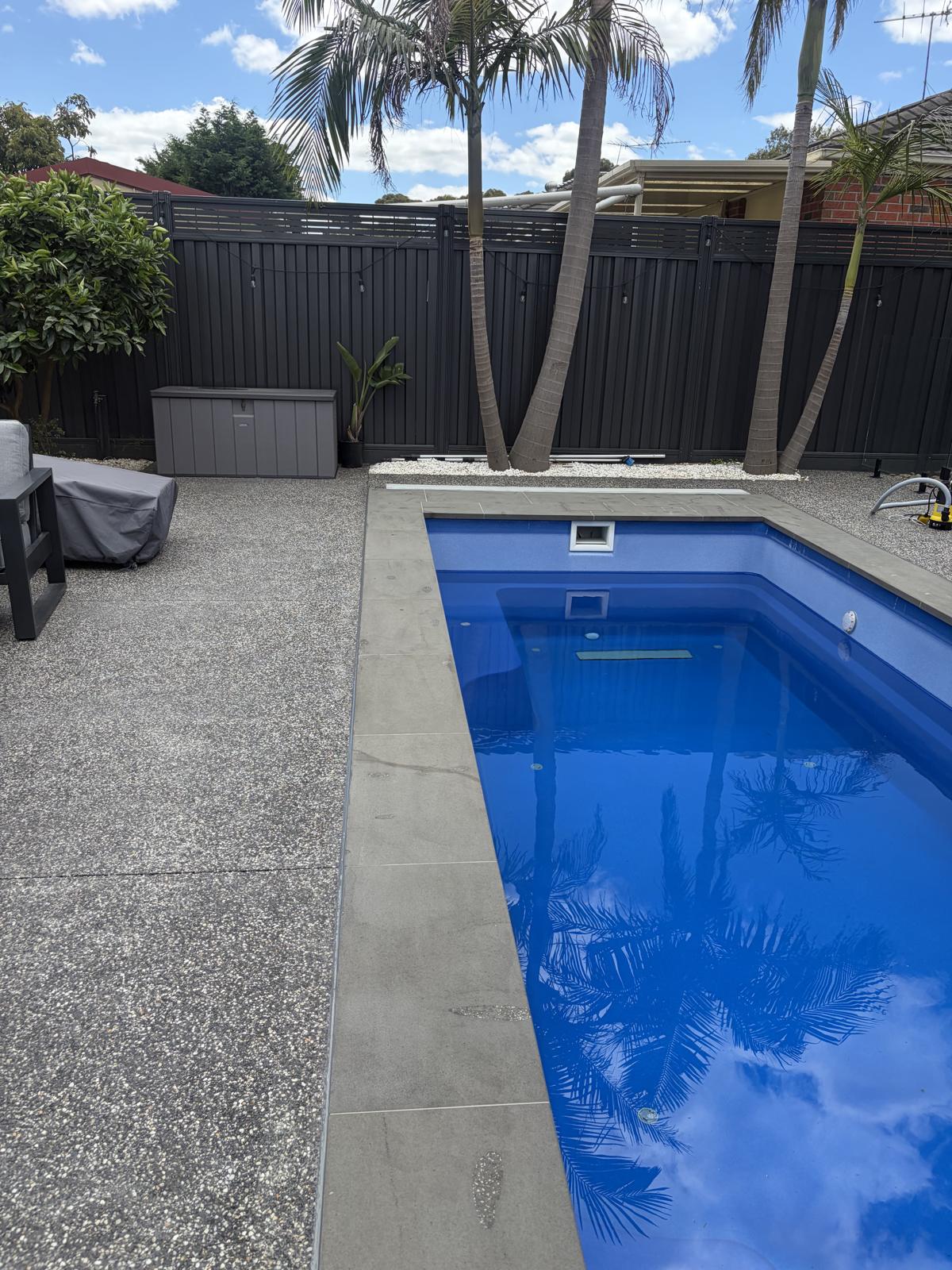
What We Sealed
The scope was the line where two different surfaces meet around the pool:
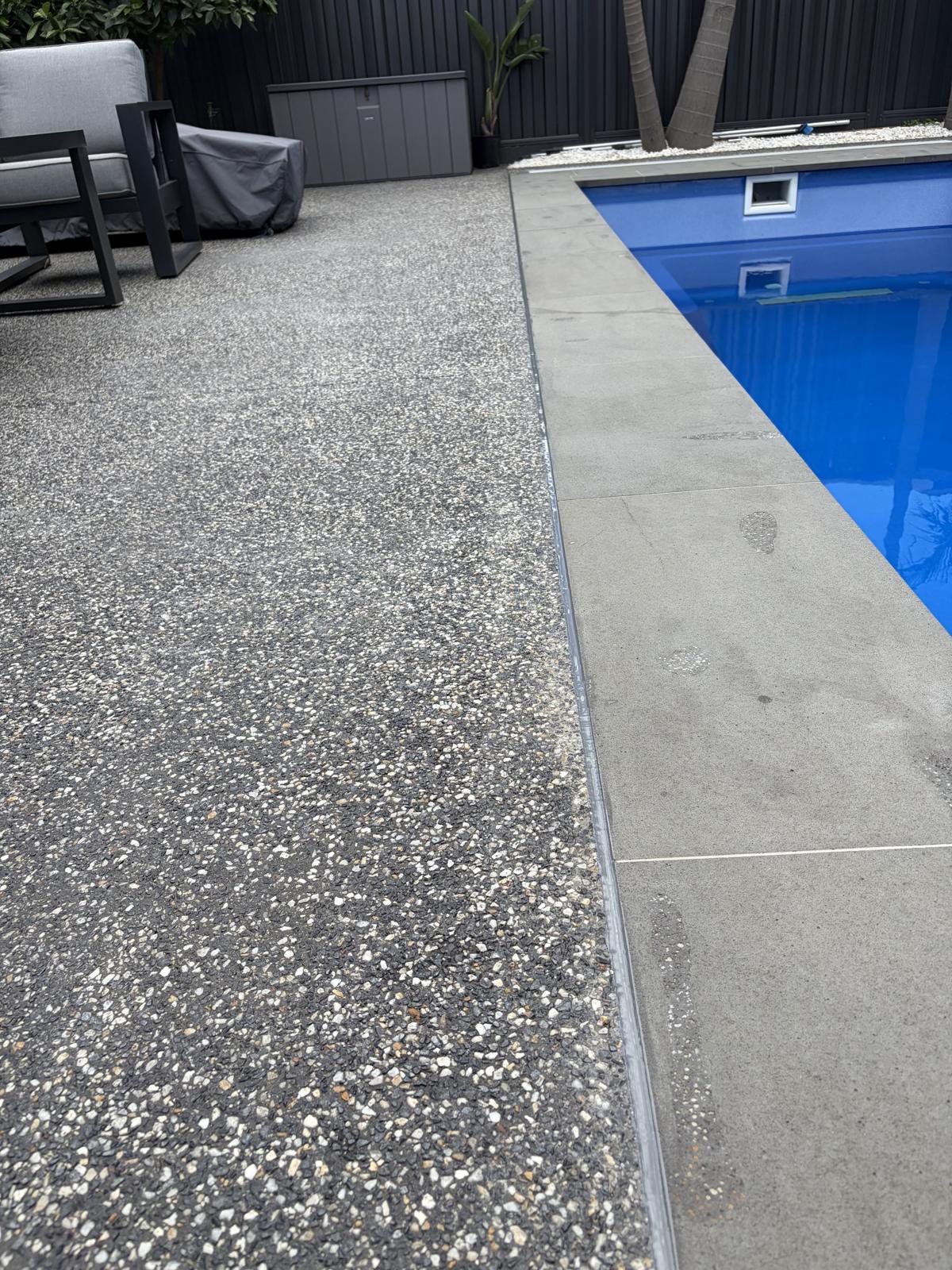
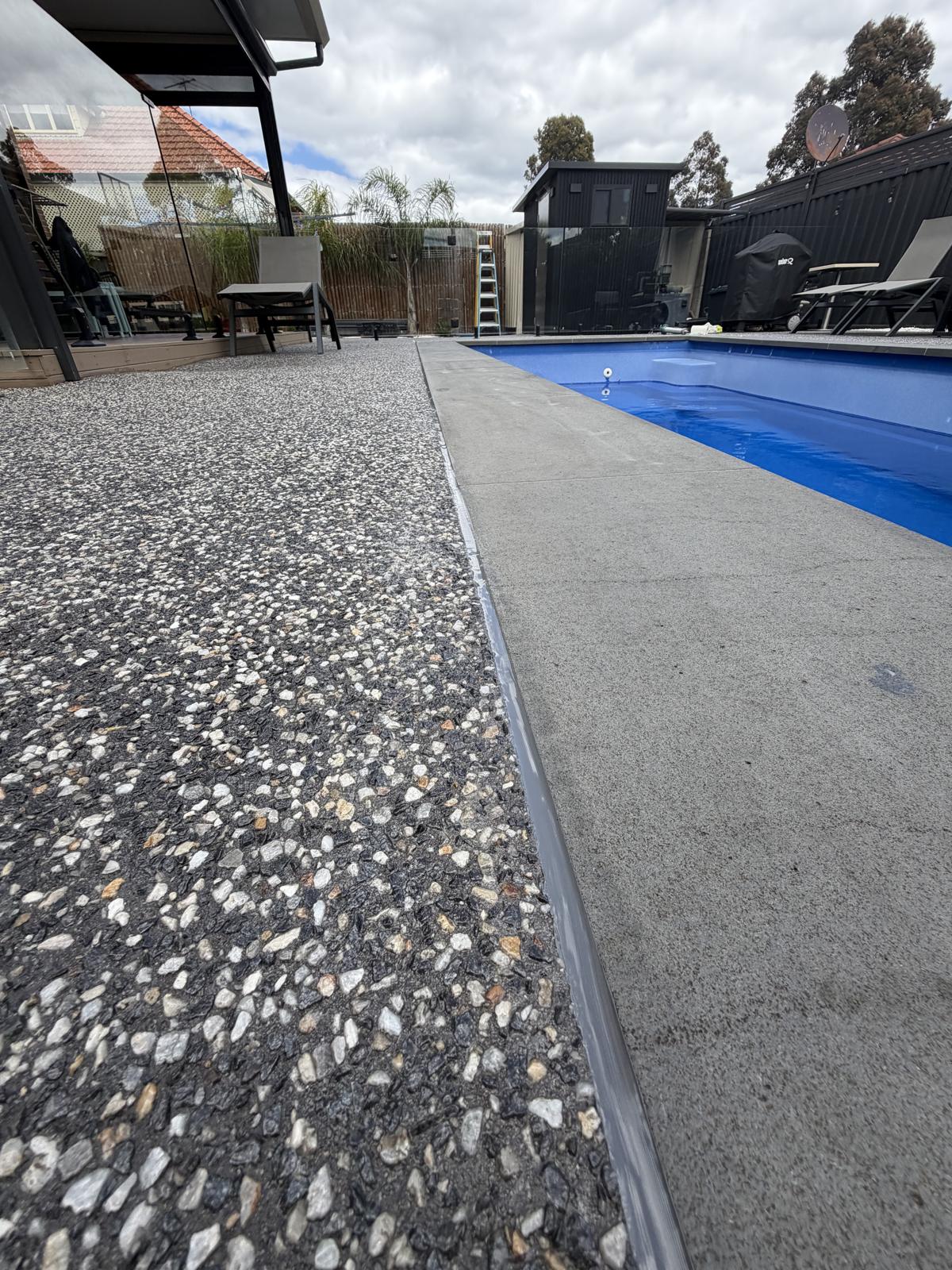
- Coping to concrete joint. The expansion joint between the outer edge of the stone coping and the exposed aggregate surround.
- The long side run. One continuous bead down the length of the pool, with no stops or starts in plain view.
- Corners and returns. The joint carried around the corners so the seal stays unbroken where the coping changes direction.
Why a Pool Surround Is a Different Job
The technique is the same as any external joint. The conditions are not.
- The pool and the slab move separately. The pool shell and the concrete around it expand, contract and settle at different rates. A rigid fill in that gap cracks or pulls away, so the joint has to stretch and compress with the seasons.
- Exposed aggregate has no clean edge. The stones along the edge of the slab sit at different heights. The sealant has to bond into that rough face without smearing across the exposed stones, because sealant on aggregate does not clean off easily.
- Stone coping marks easily. Honed stone is porous. The coping edge has to be kept clean so no residue is left along the joint line.
- Sun, water and pool chemicals. The joint sits in full sun and gets splashed with chlorinated or salt water all summer. An interior grade product breaks down quickly in those conditions.
- Bare feet. People walk across this joint. It needs to finish flush, without a ridge to catch a toe or a hollow that holds water and dirt.
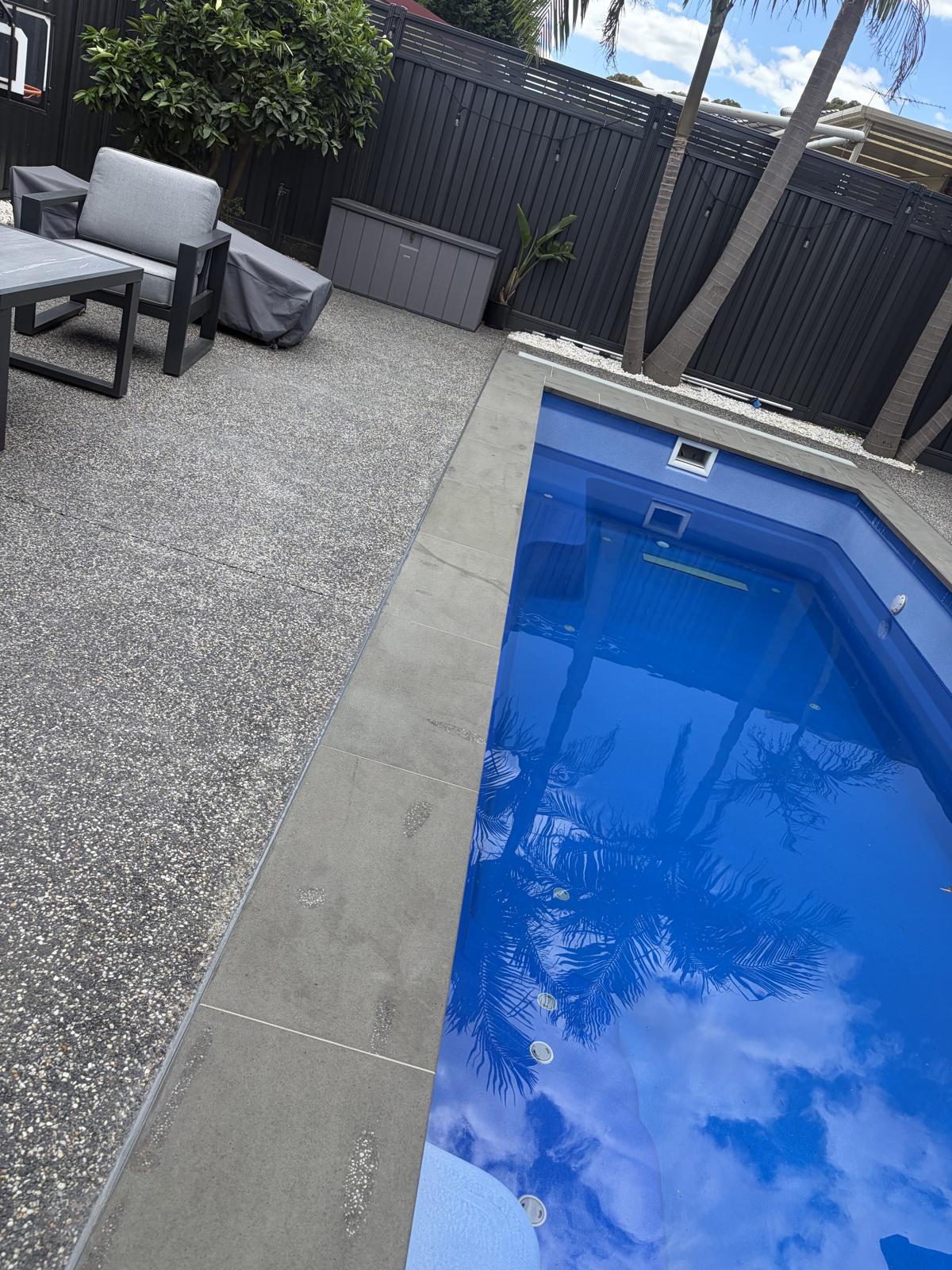
Products and Method
- Flexible exterior joint sealant suited to movement, UV and pool water exposure
- Grey colour chosen to sit with the stone coping so the joint recedes
- Joint cleaned out and dry before any sealant goes in
- Coping edge and aggregate edge protected so the sealant stays in the joint
- Bead tooled just below the surface for a flush, even line
- Joint left to cure before the area goes back into use
Pool Caulking FAQs
Why is there a gap between pool coping and the concrete
It is an expansion joint. It separates the pool structure from the paving or concrete around it so each can move without cracking the other. The gap is meant to be there. It just needs to be sealed.
Can the joint be filled with grout or mortar instead
No. Grout and mortar are rigid. They crack as soon as the pool and the surround move, and once the joint is locked up the stress goes into the coping or the slab edge instead.
How do I know when pool caulking needs replacing
Look for sealant that has cracked, hardened, shrunk away from one side or come loose, and for weeds or dirt sitting in the joint. Any of those means water is getting into the gap.
How long before the pool area can be used
Keep foot traffic and water off the joint until the sealant has cured. Cure time depends on the product, the joint size and the weather, and we confirm it on the day.
Pool Caulking Across Bundoora and the Northern Suburbs
Professional Caulking Group seals pool and paving joints and residential expansion joints across Melbourne, including Bundoora, Mill Park, Greensborough, Watsonia, Macleod, Reservoir, Thomastown and South Morang. See our service areas.
Over seven years sealing Melbourne homes, with more than 580 five star Google reviews.
Call 0435 803 646 or request a quote for your project.