

New build caulking is the last job on site and the one that decides how the finished rooms look. A new build is only finished when the joints are. The tiler, the stonemason and the glazier can each do perfect work and the room will still look incomplete until the lines between their materials are closed off cleanly.
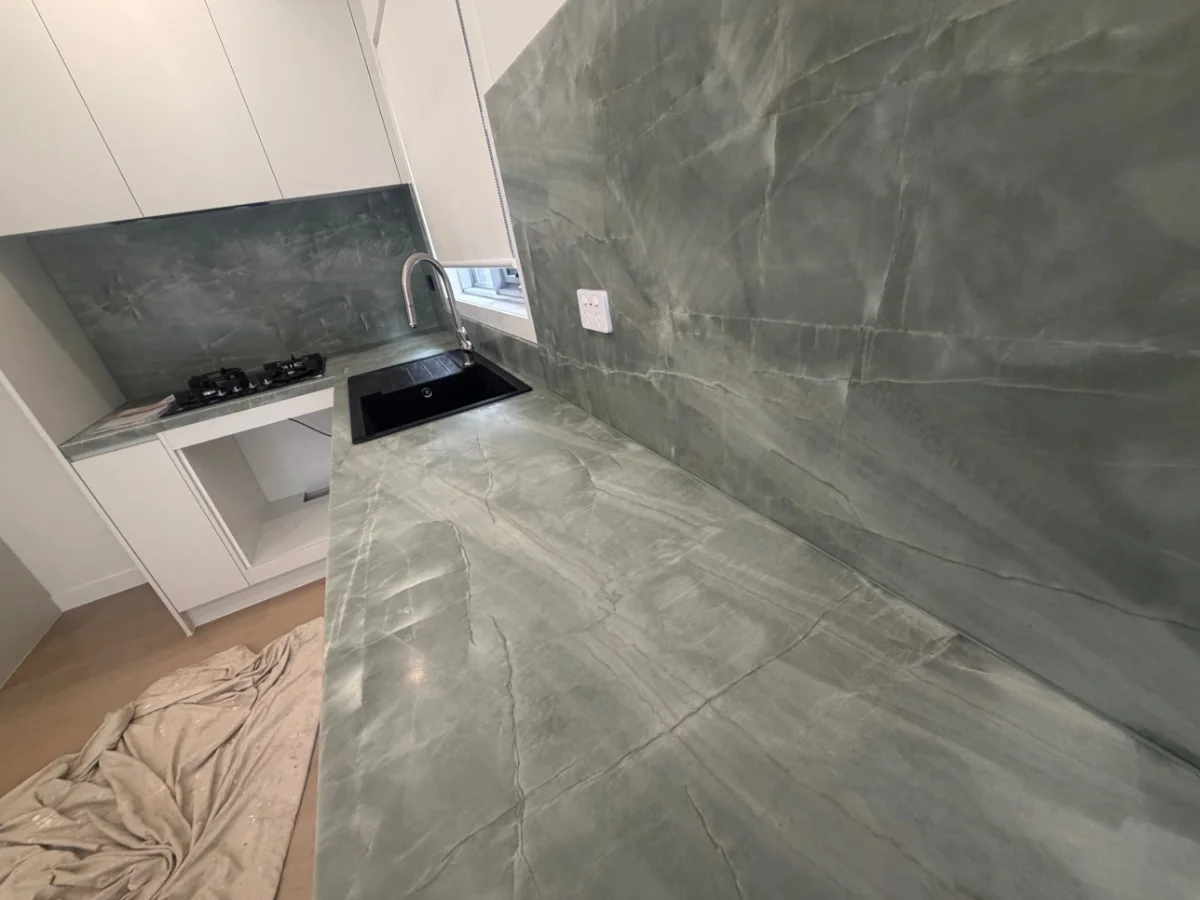
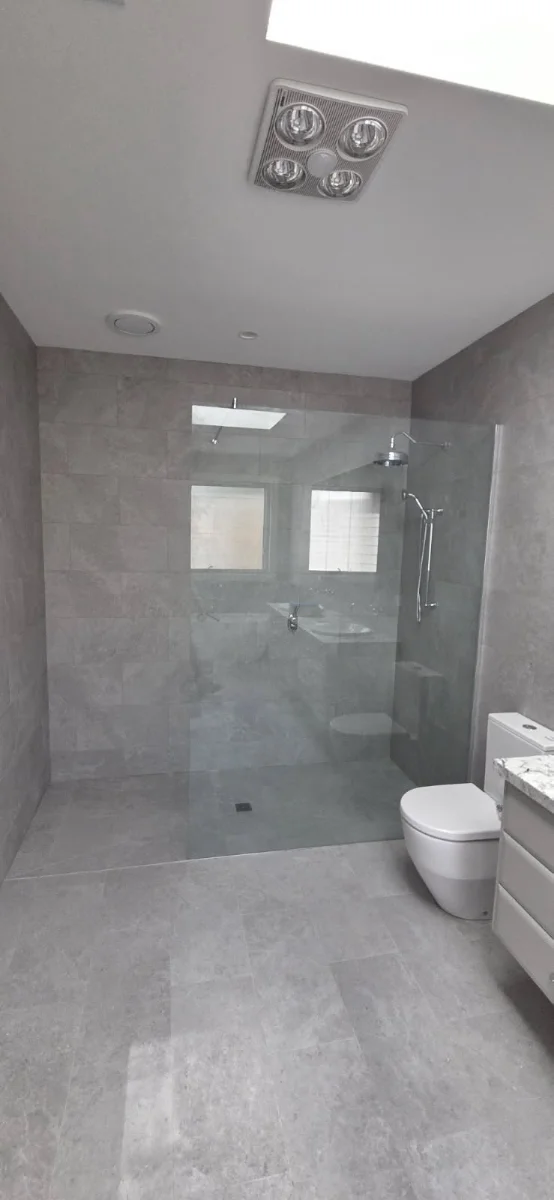
This new build in Essendon was at the end of its fitout: two bathrooms with frameless glass walk-in showers and large format grey tile, and a kitchen with a green natural stone benchtop running into a full height splashback in the same stone. We were the last trade through. Here is what the new build caulking covered and what each room asked for.
Quick answer: New build caulking covers every junction where two surfaces meet: tile to tile at the corners, floor to wall, glass to tile, stone to stone and benchtop to cabinetry. In wet areas it is what keeps water on the surface and out of the structure. In a kitchen with natural stone, the silicone has to be non-staining and colour matched, or the joint is the first thing you see.
Project at a Glance
| Detail | This project |
|---|---|
| Location | Essendon, north west Melbourne |
| Property type | Residential home, new build |
| Scope | New build caulking of two bathrooms and the kitchen at the end of fitout |
| Key substrates | Large format stone look porcelain tile, frameless shower glass, green natural stone benchtop and splashback, painted joinery |
| Wet areas | Two walk-in showers, toilet, vanity, kitchen sink and cooktop |
| Products | Mould resistant neutral cure silicone in the wet areas, non-staining neutral cure silicone colour matched to the stone |
What We Sealed
On this job the new build caulking covered every internal junction in the three rooms. The main lines were:
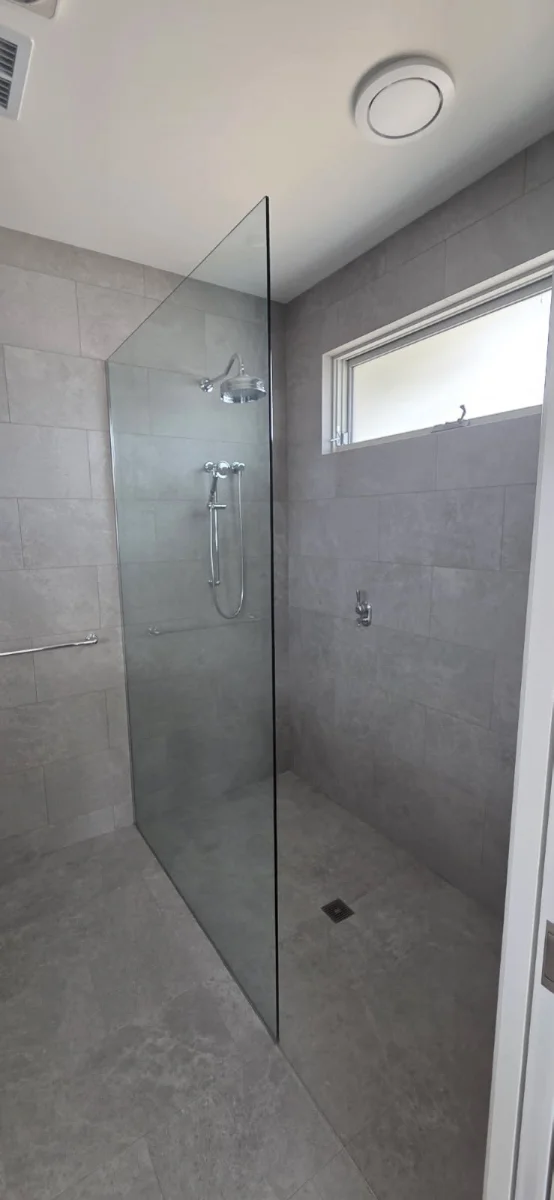
- Shower floor to wall. The full perimeter of both walk-in showers where the floor tile meets the wall tile. This is the joint that sits in water every day and it is the one that matters most.
- Internal wall corners. Floor to ceiling in each shower. Tiled corners move with the building, so they are sealed with flexible silicone and never grouted.
- Frameless glass panels. Each fixed panel sealed along the floor and up the wall so water cannot track underneath or behind the glass.
- Window reveal, toilet and vanity. The tiled reveal around the shower window, the base of the toilet pan and the vanity where it meets the wall tile.
- Benchtop to splashback. The long junction where the stone benchtop meets the full height stone splashback, plus the returns at each end.
- Sink, cooktop and cabinetry. Around the black sink and the gas cooktop, and where the stone meets the overhead cabinets and the window.
Why Walk-In Showers Leave No Room for Error
A framed shower hides a lot. A walk-in shower hides nothing. With no door, no frame and no hob, a few things change:
Silicone is the finishing seal over a properly waterproofed shower, not a substitute for the membrane underneath. The Building and Plumbing Commission sets out the waterproofing requirements for wet areas in Victorian homes.
- The junctions carry all the water. With the floor running straight through from the room into the shower, the floor to wall joint and the line under the glass are the only things directing water to the waste. Our bathroom caulking on a job like this starts with those two lines.
- Every bead is on show. Clear glass and large format tile mean long, uninterrupted lines. Any wobble or change in bead width shows from the doorway.
- The colour has to sit with the grout. On a soft grey tile, a white or mismatched bead draws a line around the whole room. We matched the silicone to the grout so the corners read as part of the tiling.
Sealing Natural Stone in the Kitchen
The kitchen was the feature of this home. A green natural stone with strong veining runs across the benchtop and straight up the wall as a full height splashback. That choice puts a lot of weight on one joint.
- Non-staining silicone only. Natural stone is porous. The wrong sealant can bleed into the edge and leave a permanent dark shadow, so only neutral cure, non-staining silicone goes on stone. This is standard on all of our kitchen caulking.
- Colour matched to the stone. The bead was matched to the green grey of the slab so the benchtop and splashback read as one continuous surface.
- A fine, even bead. Stone to stone joints are tight. A heavy bead looks clumsy against a honed surface, so the line is kept as narrow as the joint allows.
New Build Caulking Products and Method
- New build caulking carried out as the final trade, after tiling, stone, glass and painting were complete.
- All joints cleaned of dust, grout haze and construction residue, then checked dry before sealing.
- Mould resistant, neutral cure sanitary silicone in both bathrooms, colour matched to the grout.
- Non-staining neutral cure silicone on the natural stone, colour matched to the slab.
- Every bead tooled to a consistent width and wiped back clean, with no residue left on the tile, glass or stone.
- Showers and kitchen left to cure for at least 24 hours before use.
New Build Caulking FAQs
When should caulking be done on a new build?
At the very end of the fitout, once the tiling, stone, joinery, glass and painting are finished and the rooms are clean and dry. Caulking is the last trade through. Sealing earlier means other trades work over the fresh beads and the joints end up marked or damaged before handover.
Does a walk-in shower need different caulking to a framed shower?
The silicone is the same but the stakes are higher. A walk-in shower has no door, no frame and no hob to hide behind, so the floor to wall junctions and the line along the glass panel carry all of the water. Every bead is also in full view, so it has to be straight and consistent from one end to the other.
Will silicone stain a natural stone benchtop?
The wrong silicone can. Acetic cure and low grade products can bleed into porous stone and leave a dark shadow along the joint that cannot be cleaned off. We use a neutral cure, non-staining silicone on natural stone and colour match it so the bead disappears into the surface.
How long before a new shower can be used after caulking?
Allow at least 24 hours before the shower gets wet, and longer in cold or humid weather. Neutral cure silicone skins over quickly but needs time to cure through its full depth before it is put under water.
New Build and Bathroom Caulking Across Essendon and the North West
Professional Caulking Group handles new build caulking, renovations and recaulking for builders, renovators and homeowners on bathrooms, kitchens and laundries across Melbourne, including Essendon, Essendon North, Moonee Ponds, Strathmore, Ascot Vale, Niddrie and Pascoe Vale. See our service areas.
Over seven years sealing Melbourne homes, with more than 590 five star Google reviews.
Call 0435 803 646 or request a quote for your project.