

Silicone is the first thing to age in a bathroom. The tile can look as good as the day it was laid while the bead around the bath has yellowed, cracked or started to lift, and that tired line drags the whole room down with it.
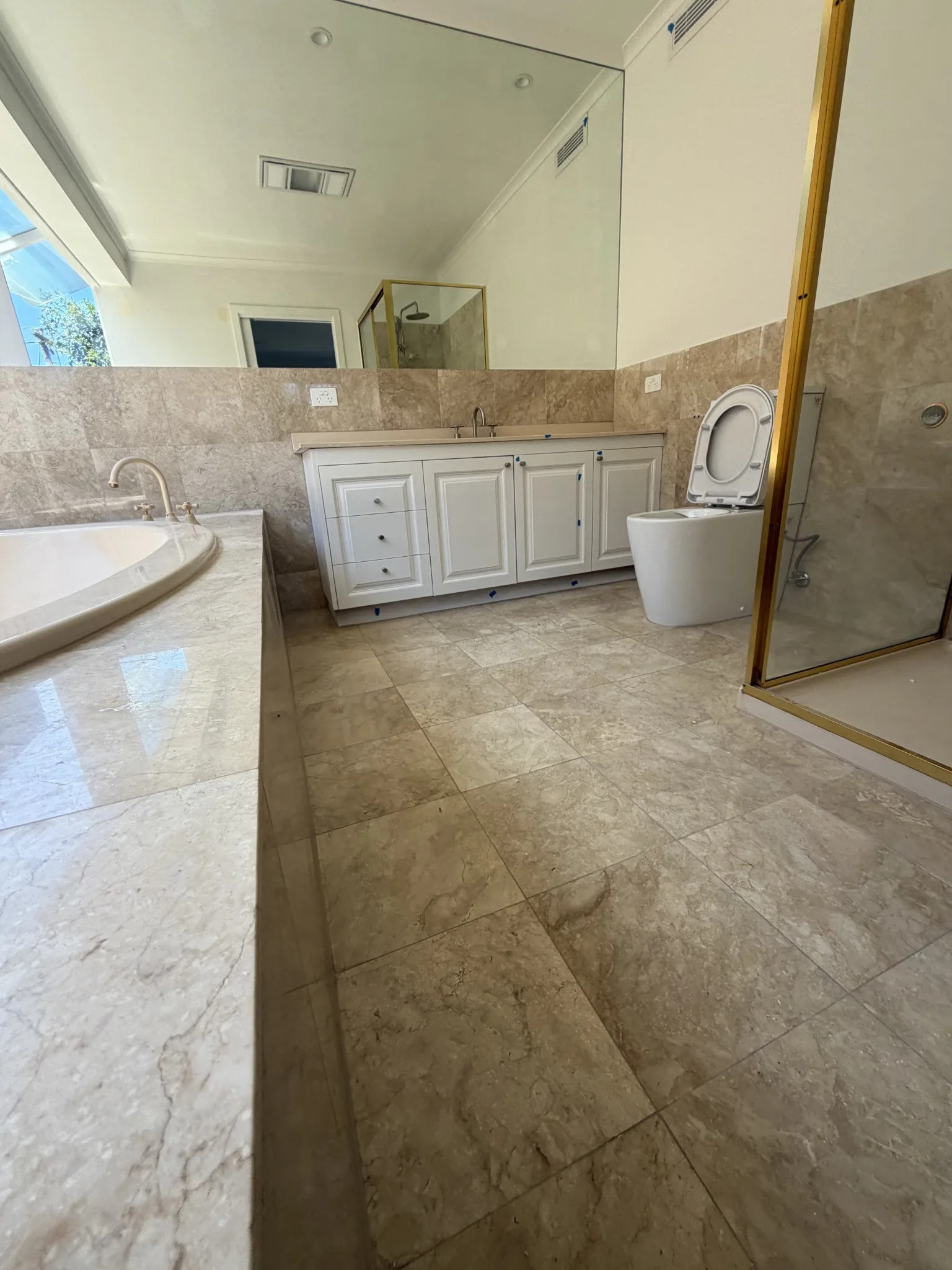
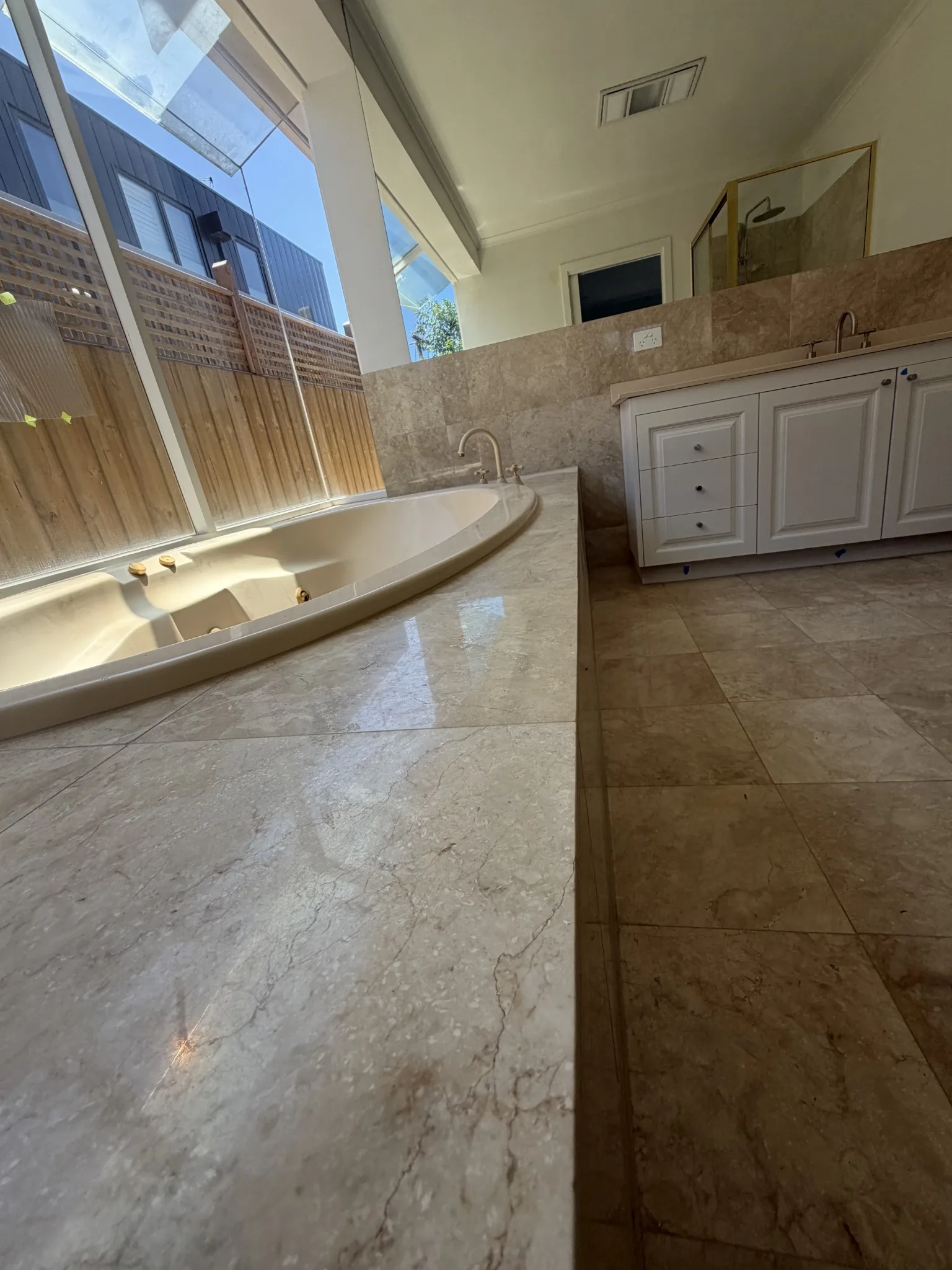
This Brighton bathroom had good bones: stone look tile on the floor and walls, a corner spa bath set into a tiled hob, and a long vanity under a full width mirror. It needed the old sealant taken out and fresh silicone put back in. Here is what the job involved and why recaulking is a different job to sealing a new bathroom.
Quick answer: Bathroom recaulking means cutting out all of the old silicone, cleaning and drying the joints, then applying a new bead. It restores the seal around the bath, vanity and toilet and it lifts the look of the whole room. The new silicone only lasts if the old bead is removed completely first. Sealing over the top of old silicone is the most common reason a reseal fails.
Project at a Glance
| Detail | This project |
|---|---|
| Location | Brighton, Bayside Melbourne |
| Property type | Residential home, existing bathroom |
| Scope | Removal of old silicone and recaulking of the bath, hob, vanity, toilet and tile junctions |
| Key substrates | Stone look floor and wall tile, acrylic spa bath, stone vanity top, painted joinery |
| Wet areas | Corner spa bath and tiled hob, vanity basin, toilet |
| Products | Mould resistant neutral cure silicone, colour matched to the tile |
What We Resealed
The scope covered the junctions where water sits and where the old sealant was most on show:
- Spa bath to hob. The full curved perimeter where the bath rim meets the tiled hob. This is the joint that takes the most water and the most movement every time the bath is filled.
- Hob and wall tile. The line where the hob top meets the wall tile, plus the internal corners.
- Vanity. The stone top to wall tile junction, around the basin and tapware, and where the cabinet meets the wall and floor.
- Toilet. The pan to floor seal on the back to wall suite.
- Floor to wall junctions. The perimeter line where the floor tile meets the wall tile and the face of the hob.
Why Recaulking Is a Different Job to New Work
On a new build the joints are clean and dry. On a reseal, most of the work happens before the gun comes out.
- The old silicone has to come out completely. New silicone does not bond to old silicone. Any residue left in the joint becomes the point where the new bead lets go.
- Mould lives behind the bead. Surface cleaning does not reach it. Once the old sealant is out, the joint is cleaned back to bare tile and acrylic so the mould is not sealed in.
- The joint has to be dry. Moisture trapped behind new silicone stops it curing properly and brings the mould straight back.
- Spa baths move. An acrylic bath flexes under the weight of water and a person. The bead around the rim has to stay flexible, which is why a quality neutral cure silicone matters more here than anywhere else in the room.
- Polished tile shows everything. A glossy hob in full sun from the window reflects every wobble, so the bead has to be slim, even and tooled in one pass.
Products and Method
- All existing silicone cut out and the residue removed back to clean tile, acrylic and stone
- Joints cleaned, treated for mould and left to dry before sealing
- Mould resistant, neutral cure silicone colour matched to the stone look tile
- Beads tooled to a slim concave profile so water sheds instead of pooling
- Bath left to cure before use
Bathroom Recaulking FAQs
How do I know my bathroom needs recaulking?
Look for silicone that has gone black or orange with mould, beads that are cracked or peeling away from the tile, and gaps opening up around the bath, vanity or toilet. If the mould comes back within weeks of cleaning, it is inside the sealant and the bead needs replacing.
Can you put new silicone over the old silicone?
No. New silicone does not bond properly to old silicone, and any mould underneath stays there. The old bead has to come out completely, and the joint has to be cleaned and dried, before anything new goes in.
How long does it take to recaulk a bathroom?
A single bathroom like this one is usually done within a day. Most of the time goes into removing the old sealant and preparing the joints, not applying the new bead.
How long before the bath can be used?
Allow at least 24 hours, longer in cool or humid weather. If water is still getting through after resealing, our guide to telling a silicone problem from a waterproofing problem explains what to check next.
Bathroom Recaulking Across Brighton and Bayside
Professional Caulking Group works with homeowners, renovators and property managers on bathrooms, kitchens and laundries across Melbourne, including Brighton, Brighton East, Hampton, Sandringham, Elsternwick and Bentleigh. See our service areas.
Over seven years sealing Melbourne homes, with more than 590 five star Google reviews.
Call 0435 803 646 or request a quote for your project.